Emigrate 与 immigrate 的区别
· Summer LongIELTS Expert & Curriculum Designer
“Emigrate”和“immigrate”是两个涉及人口从一个国家迁移到另一个国家的词。虽然它们经常被混淆,但含义截然不同。弄清楚什么时候用“emigrate”、什么时候用“immigrate”,对于准确表达至关重要,尤其是在讨论移民问题时。
在这篇文章中,我们将拆解“emigrate”和“immigrate”之间的区别,提供如何正确使用每个词的示例,并附上 CEFR 见解,指导不同水平的学习者。
什么是 emigrate?
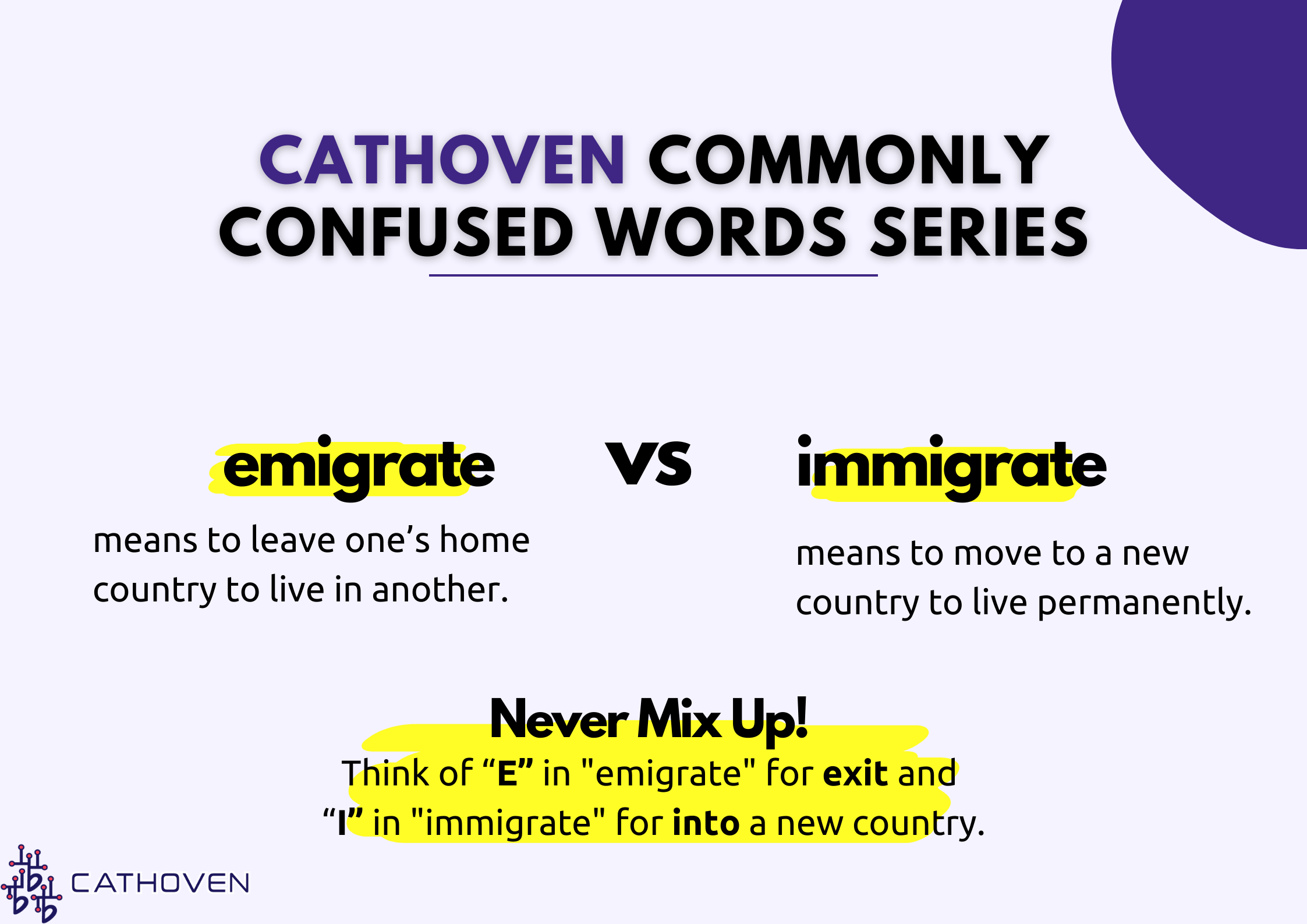
“Emigrate”意为离开自己的国家去另一个国家生活。重点在于从原籍国离开。
- CEFR 级别:B1
“Emigrate”通常在中级引入,此时学习者开始接触更复杂的词汇和全球性话题。
“emigrate”在句子中的示例:
- Many people emigrate from their home countries in search of better opportunities. (B1)
- 离开一个国家这一行为的一般示例。
- Her family emigrated from Russia to the United States in the 1990s. (B2)
- 带有起点和目的地细节、更具体地展示移出的语境。
什么是 immigrate?
“Immigrate”意为进入并定居在一个你并非出生于此的新国家。重点在于抵达新国家。
- CEFR 级别:B1
“Immigrate”同样通常在 B1 级别引入,常与“emigrate”一起出现在关于移民的讨论中。
“immigrate”在句子中的示例:
- Many people immigrate to the U.S. every year. (B1)
- 展示抵达新国家这一行为的一般示例。
- She immigrated to Canada to pursue a better education. (B2)
- 更详细地展示移入原因的句子。
“Emigrate”的使用示例
B1 级别(中级):
- Thousands of people emigrate from rural areas to cities every year in search of jobs.
- 侧重于从一个地方迁往另一个地方。
- During the 19th century, many Europeans emigrated to America for a better life.
- 展示移出历史背景的示例。
B2 级别(中高级):
- His grandparents emigrated from Poland to escape political persecution.
- 更具体地展示移出原因的示例。
- The political instability forced the family to emigrate to a neighboring country.
- 将移出与原因(政治动荡)联系起来的示例。
C1 级别(高级):
- She chose to emigrate after receiving a job offer from a multinational company abroad.
- 展示与职业相关个人决定的更细腻示例。
- Many skilled professionals emigrate due to better career prospects in developed nations.
- 展示与经济移民相关、更抽象的移出用法。
“Immigrate”的使用示例
B1 级别(中级):
- People immigrate to large cities for better job opportunities.
- 展示迁入新国家或新地区的简单句子。
- She immigrated to Germany after marrying a local citizen.
- 将移入与具体个人事件联系起来的示例。
B2 级别(中高级):
- Many families choose to immigrate for a better education for their children.
- 移入背后更复杂的理由。
- He immigrated to Australia to start his own business in the tech industry.
- 展示移入职业动机的示例。
C1 级别(高级):
- Immigrating to a new country can be challenging, especially when adapting to a different culture and legal system.
- 高阶用法,侧重于移民更广泛的挑战。
- Many immigrants have made significant contributions to the economic and cultural landscape of their new homes.
- 更抽象的句子,突出移民带来的积极成果。
Emigrate 与 immigrate 的主要区别
- Emigrate:离开自己的祖国去另一个国家定居的行为。重点在于离开。
示例:He emigrated from Italy to Australia. - Immigrate:进入一个新国家长期居住的行为。重点在于抵达。
示例:She immigrated to the U.K. last year.
记住这一区别的实用方法是:“emigrate”以 E(代表 exit,离开)开头,而“immigrate”以 I(代表 into,进入)开头。
实际应用
猫多芬的 AI 驱动 工具能够帮助教师和学习者通过真实场景练习重要概念。例如,练习生成器(Exercise Creator)让你只需提供一段文本即可生成理解练习。为了方便起见,我们为你准备了一段示例文本——只需点击“use example text”即可开始。文本就位后,你就可以创建选择题、判断题和简答题。
点击下方的“use an example text”,开始创建题目,检测你的学生对 emigrate 和 immigrate 的理解!
立即用你 自己的文本 试试(简易版)
选择题
单词数:0
输入你想用来创建练习的 YouTube 视频链接,或使用示例视频
剩余次数:3
在
Cathoven Language Hub
上创建一个免费账户,即可获得更多免费次数。
结果将显示在这里:
如果你想创建更多、更多样化的题目,请前往我们的 hub https://nexthub.cathoven.com/exercise-creator。全部免费!
关于行与列的常见问题
“Emigrate”意为离开自己的祖国去另一个国家生活。
“Immigrate”意为迁往一个新国家长期居住。
把“emigrate”中的 E 想成 exit(离开),把“immigrate”中的 I 想成 into a new country(进入一个新国家)。